Utah gives you 10 days to protect your license. Here is your clock.
After a DUI arrest in Utah, you have 10 days to request a DLD hearing with the Driver License Division. Enter the date below and we will lay out your deadline day by day.

Here are your days. Circle the last one.
Source: Utah DLD; Utah Code 53-3-223. Check the deadline printed on your own notice.
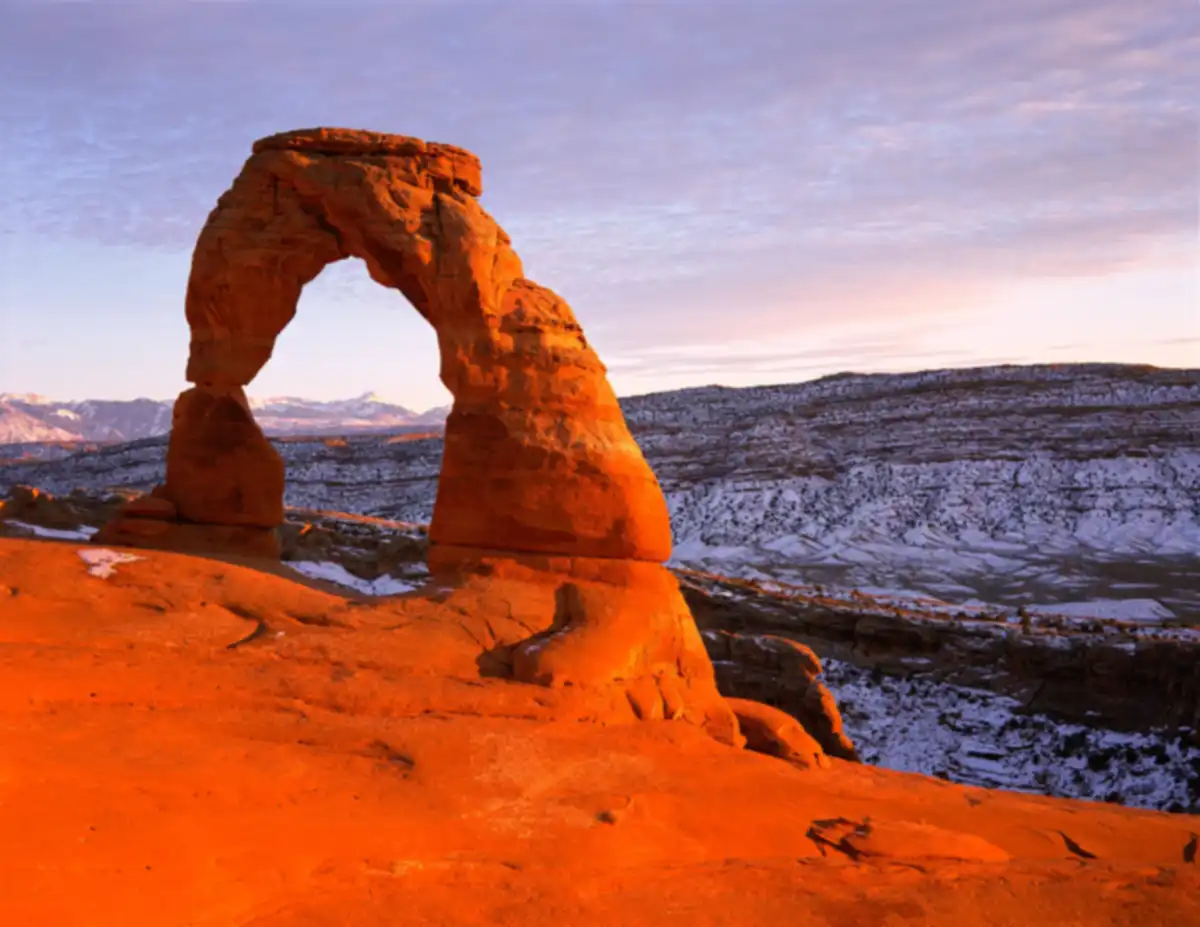
This page takes its colors from the Utah Delicate Arch “Life Elevated” plate. Photo: Delicate Arch, Arches National Park (NPS/Neal Herbert, public domain).
What happens next in Utah
Protect your license
Ask the Driver License Division for a hearing before your deadline. Missing it usually means the suspension starts without one.
Talk to a DUI attorney
A Utah DUI attorney can handle the license hearing and the court case together.
Your court case
The criminal case runs in the court where you were arrested, on its own schedule.
Classes and evaluation
Most courts order an alcohol screening or assessment and an education program.
Ignition interlock
Many drivers need an interlock device to drive during or after a suspension.
Get your license back
Reinstatement usually means fees, proof of insurance such as an SR-22, and finishing every requirement.
Utah DUI laws, penalties and what happens next
Written from Utah's own statutes, licensing rules and state safety data. Updated November 2026.
Your timeline after a Utah DUI arrest
- Day 0
Arrest
The officer gives you notice that the Driver License Division intends to suspend your license. Your vehicle may be impounded.
- Day 10
Hearing request deadline
Your written hearing request must reach the Driver License Division within 10 calendar days of that notice.
- By day 45
License hearing
If you asked in time, the Division must give you a hearing within 45 days of the arrest, in the county of arrest or one next to it.
- Day 60
Suspension starts
If the Division rules against you, or you never asked for a hearing, the suspension begins on the 60th day after the arrest.
- Weeks to months
Court case
The criminal case runs separately in justice or district court. A conviction brings its own license action, with credit for days already served on the same arrest.
What counts as a DUI in Utah
Utah was the first state to drop the legal limit from .08 to .05, effective December 30, 2018. Under Utah Code 41-6a-502, you commit DUI if you drive or are in actual physical control of a vehicle and any one of these is true:
- A chemical test taken afterward shows a blood or breath alcohol concentration of .05 or higher.
- Your alcohol concentration was .05 or higher at the time you were driving.
- You were under the influence of alcohol, any drug, or both, to a degree that made you incapable of safely driving. Here no number is needed.
Blood alcohol is measured in grams per 100 milliliters of blood. Breath alcohol is measured in grams per 210 liters of breath. DUI is a strict liability offense, so the state does not have to prove you meant to break the law. A guilty or no-contest plea to DUI cannot be held in abeyance.
"Vehicle" is broader than a car
For DUI purposes Utah counts off-highway vehicles and motorboats as vehicles (Utah Code 41-6a-501).
Sleeping it off
"Actual physical control" is judged on all the circumstances. The statute says it does not include a situation where all of these are true: you are asleep in the vehicle, you are not in the driver's seat, the engine is off, the vehicle is lawfully parked, and it is evident you did not drive there impaired.
Stricter limits for some drivers
- Under 21: any measurable alcohol at all (Utah Code 53-3-231).
- Alcohol restricted drivers (most people with a recent DUI): any measurable or detectable alcohol (Utah Code 41-6a-530).
- Drugs: any measurable controlled substance or its metabolite, even without signs of impairment (Utah Code 41-6a-517). See the drug section below.
Extreme DUI: .16 and higher, or alcohol plus drugs
Utah law now names a more serious category called extreme DUI (Utah Code 41-6a-501). A DUI is extreme when there is admissible evidence that you had:
- a blood or breath alcohol level of .16 or higher;
- a level of .05 or higher plus any measurable controlled substance; or
- two or more controlled substances in your body that were not prescribed or recommended under Utah's medical cannabis law.
An extreme DUI cannot be reduced to impaired driving, and it carries heavier minimum sentences (see the penalty table). It also brings a likely ignition interlock order and an "interdicted person" designation, which means stores and bars may not sell you alcohol and you surrender your license or ID card to the court (Utah Code 41-6a-505).
Separately, any DUI conviction with evidence of .16 or higher requires the judge to order treatment and at least one of these, or explain on the record why not: an ignition interlock, an ankle alcohol monitor, or electronic home confinement.
Misdemeanor or felony: how Utah grades a DUI
| Charge level | When it applies |
|---|---|
| Class B misdemeanor | The default for a DUI. |
| Class A misdemeanor | A passenger under 16 was in the vehicle; or you are 21+ with a passenger under 18; or you were also driving the wrong way on a divided highway, freeway ramp, or multi-lane one-way road; or you have one prior conviction within 10 years. |
| Third degree felony | Two or more prior convictions within 10 years, or any prior felony DUI conviction at any time. |
| Second degree felony | Automobile homicide: negligent driving that causes a death while at .05 or impaired. Prison of 5 to 15 years (Utah Code 76-5-207). |
Each passenger under 16 counts as a separate DUI offense. Prior "convictions" include impaired driving pleas, alcohol-related reckless driving, metabolite convictions, test-refusal convictions and out-of-state DUIs (Utah Code 41-6a-501).
Impaired driving: the common plea reduction
With the prosecutor's agreement, a first class B DUI can be entered as impaired driving (Utah Code 41-6a-502.5). It is still a class B misdemeanor and still carries the same screening, education or treatment orders. It is not available if you have a prior conviction or were charged with extreme DUI, and it still counts as a prior if you are arrested again.
Minimum court penalties, offense by offense
These are the floors set by Utah Code 41-6a-505, effective July 1, 2026. A judge can go higher, and a judge cannot waive these minimums except through the 24-7 sobriety program described below.
| Offense | Jail (minimum) | Fine (minimum) | Also required |
|---|---|---|---|
| First DUI | 2 days, or 48 hours of community service | $700 | Screening, assessment if needed, education or treatment; impound, towing and storage costs |
| First extreme DUI | 5 days, or 2 days plus 30 days of electronic home confinement | $700 | Probation; ignition interlock unless the judge finds it unnecessary; interdicted person; screening and education or treatment |
| Second DUI within 10 years | 10 days, or 5 days plus 30 days of electronic home confinement | $800 | Probation; screening and education or treatment; ignition interlock on every vehicle you own or drive |
| Second within 10 years that is extreme | 20 days; or 10 days plus 60 days of home confinement; or 10 days plus treatment | $800 | Probation; ignition interlock; interdicted person |
| Felony DUI, prison suspended | 60 days plus 60 days of electronic home confinement | $1,500 | Supervised probation; screening, assessment and treatment |
| Felony extreme DUI, prison suspended | 120 days plus 120 days of electronic home confinement | $1,500 | Supervised probation; interdicted person |
How jail can be served
- With both sides agreeing and the judge approving, jail can be converted to electronic home confinement.
- A judge can let you serve jail in two-day blocks once a week so you can keep your job.
- If you are 21 or older and in a 24-7 sobriety program (twice-daily breath tests or a continuous alcohol monitor, plus random drug tests), the judge can suspend the jail term. On a second or later offense you must still serve at least 5 or 10 days first (Utah Code 41-6a-515.5).
Your license: two separate tracks
A Utah DUI arrest hits your license twice: once through the Driver License Division right after the arrest, and again if the court convicts you. Days already served on the first track count toward the second when both come from the same arrest (Utah Code 41-6a-509).
Track 1: the Driver License Division (starts at arrest)
- The officer gives you notice within 24 hours of arrest, on the Division's behalf, that it intends to suspend your license.
- You have 10 calendar days to request a hearing in writing. The Division then must hear you within 45 days of the arrest, in the county of arrest or an adjacent county (Utah Code 53-3-223). The Division takes requests online at dld.utah.gov/hearing-request.
- The hearing covers three things: whether the officer had reasonable grounds, whether you refused a test, and the test results.
- If you lose, miss the hearing or never ask for one, the suspension starts on the 60th day after the arrest.
| Driver License Division suspension | 21 and older | Under 21 |
|---|---|---|
| First | 120 days | 6 months |
| Second within 10 years | 2 years | Until 21 or 2 years, whichever is longer |
Ways to get back on the road sooner
- Charge dismissed: the Division reinstates you right away once it gets written proof.
- Charge reduced: reinstatement is possible after 60 days of the 120-day suspension.
- Ignition interlock option: on a first alcohol suspension you can choose to drive with an interlock for the 120 days instead. On a second, after serving at least 90 days, you can choose a two-year interlock restriction if your charge is a misdemeanor.
- 24-7 sobriety or DUI court: taking part can also lead to early reinstatement.
- Appeal: you can petition a court for review within 30 days of the Division's suspension order.
Track 2: after a court conviction
| Conviction | Age 21+ | Age 19 or 20 | Under 19 |
|---|---|---|---|
| First | 120-day suspension | Until 21 or 1 year, whichever is longer | Until 21 |
| Second within 10 years | 2-year revocation | Until 21 or 2 years, whichever is longer | Until 21 |
A judge can add 90 days, 120 days, 180 days, one year or two years more. Not finishing court-ordered screening, assessment, classes, treatment or community service also leads to a suspension.
The hearing matters. In FY 2025 the Division held 3,826 DUI license hearings, and in 1,366 of them (36%) no action could be taken against the driver, usually because the arresting officer did not appear (CCJJ, 23rd Annual DUI Report).
Refusing a breath or blood test
Driving in Utah means you have already consented to a chemical test of your breath, blood, urine or oral fluid (Utah Code 41-6a-520). The officer chooses which tests and how many. Refusing any one of them counts as a refusal, even if you take another. You do not have a right to talk to a lawyer before deciding. After the officer's test, you may have a physician or physician assistant of your choice run an additional test at your own expense.
| Refusal revocation | 21 and older | Under 21 |
|---|---|---|
| First | 18 months | Until 21 or 2 years, whichever is longer |
| Prior DUI-type offense in the last 10 years | 36 months | Until 21 or 36 months, whichever is longer |
The same 10-day window applies to request a hearing on a refusal (Utah Code 41-6a-521). After serving at least 90 days of an 18-month revocation, you may be able to drive on a two-year ignition interlock restriction.
Refusal can also be its own crime
If a judge issues a warrant for your blood and you still refuse, that is the crime of refusing a chemical test (Utah Code 41-6a-520.1). It is graded like a DUI (class B, class A or felony) and sentenced like a DUI, plus 24 more hours of jail, a $100 higher fine, and an interlock, ankle monitor or home confinement. In FY 2025, 13% of people arrested for DUI in Utah refused testing.
Drivers under 21: not a drop
If you are under 21, driving with any measurable alcohol triggers a license action, even far below .05 (Utah Code 53-3-231). A first offense means your license is denied for at least six months starting on the 60th day after arrest. A second offense within 10 years means until you turn 21 or two years, whichever is longer. You also have to complete an assessment and whatever education or treatment it recommends before you get your license back.
An actual DUI conviction under 21 adds the court-side suspension shown above, and the judge must order an ignition interlock as a condition of probation (Utah Code 41-6a-518). The Driver License Division lists the interlock restriction after a DUI conviction as three years for drivers under 21 (dld.utah.gov). In FY 2025 there were 1,181 DUI-related arrests of people under 21.
Ignition interlock in Utah
An ignition interlock is a breath tester wired to the ignition. In Utah it is set so the vehicle will not start or keep running if it reads .02 or higher (Utah Code 41-6a-518).
- When it is ordered: for an alcohol DUI conviction with probation unless the judge states it is not needed; always for drivers under 21; always for a second DUI within 10 years, on every vehicle you own or drive.
- How long: the Division lists the restriction after a DUI alcohol conviction as 18 months for drivers 21 and older and three years for drivers under 21.
- Who pays: you pay to lease, install, maintain and monitor it. If a judge finds you indigent, costs can be reduced or paid in installments, and the provider covers waived amounts.
- Deadlines: proof of installation is due within 30 days of the order, and the device must be checked at least every 60 days.
- Work vehicles: you may drive an employer's vehicle without an interlock in limited cases, with written employer verification and the employer's insurer informed.
You choose a state-licensed interlock provider. The court cannot assign one.
Alcohol restricted driver status
After a DUI, most Utah drivers become an alcohol restricted driver for years (Utah Code 41-6a-529). During that time, driving with any measurable or detectable alcohol is a class B misdemeanor, and the court will usually order an interlock (Utah Code 41-6a-530).
| Restricted for | Triggered by |
|---|---|
| 2 years | A misdemeanor DUI or impaired-driving conviction, or a Driver License Division alcohol suspension |
| 3 years | Conviction for driving without a required interlock or for violating this restriction |
| 5 years | A test-refusal revocation, a misdemeanor refusal conviction, or a class A misdemeanor DUI |
| 10 years | A second DUI-type conviction within 10 years, a felony refusal conviction, or a second refusal |
| Life | Automobile homicide or felony DUI (offenses on or after July 1, 2005) |
| Until 21 | Every driver under 21, and every novice learner driver |
Drugs, prescriptions and medical cannabis
Utah has two drug-driving rules. First, a DUI can be based on any drug that makes you incapable of driving safely (Utah Code 41-6a-502). Second, under Utah Code 41-6a-517 it is a class B misdemeanor to drive with any measurable controlled substance or metabolite in your body, even with no sign of impairment.
- The inactive marijuana metabolite (THC-COOH) on its own does not violate the metabolite law.
- It is a defense if the substance was prescribed to you, taken as medical cannabis under Utah's program, taken involuntarily, or otherwise legally taken.
- A metabolite conviction carries the same license suspensions as DUI: 120 days for a first offense if you are 21 or older, and two years for a second within 10 years.
Drug-positive drivers were involved in 98 Utah traffic deaths in 2024, more than the 56 alcohol-related deaths that year (CCJJ).
Open containers
No one in a vehicle on a Utah road, driver or passenger, may drink alcohol, and no opened container may be in the passenger compartment, which includes the glove box (Utah Code 41-6a-526). Put opened bottles in the trunk. Exceptions cover the living quarters of a motor home or camper, limousines and chartered buses that follow state rules, motorboats, and passengers in taxis and buses. A violation is a class C misdemeanor.
Costs set by Utah law
These are the dollar amounts written into Utah law. Your total will be higher once you add attorney fees, classes, treatment, interlock rental and insurance.
| Item | Amount | Source |
|---|---|---|
| Minimum fine, first DUI or first extreme DUI | $700 | Utah Code 41-6a-505 |
| Minimum fine, second DUI within 10 years | $800 | Utah Code 41-6a-505 |
| Minimum fine, felony DUI with prison suspended | $1,500 | Utah Code 41-6a-505 |
| Refusal conviction | $100 more than the DUI minimum | Utah Code 41-6a-520.1 |
| Administrative impound fee, plus testing fee | $600 + $60, plus towing and storage | Utah Code 41-6a-1406 |
| License reinstatement after an alcohol suspension | $40 + $45 + $262 = $347 | Utah Code 53-3-105 |
Utah DUI by the numbers
From the Utah Commission on Criminal and Juvenile Justice's 23rd Annual DUI Report to the Utah Legislature (fiscal year July 2024 to June 2025, with 2024 crash data).
Of people arrested, 74% were men. The largest age group, 35%, was 25 to 36. City police made 52% of arrests, the Utah Highway Patrol 35% and county sheriffs 13%.
Utah DUI questions
What is the legal BAC limit in Utah?
Utah's limit is .05 for drivers 21 and older, the lowest in the United States. Drivers under 21 and alcohol restricted drivers may not have any measurable alcohol. You can also be convicted at any level if alcohol or drugs made you unable to drive safely (Utah Code 41-6a-502).
How long do I have to request a DUI hearing in Utah?
You must ask the Driver License Division for a hearing in writing within 10 calendar days of the notice the officer gives you, which is usually the day of arrest. If you do not, your license suspension starts on the 60th day after the arrest (Utah Code 53-3-223).
How long is a license suspension for a first DUI in Utah?
For drivers 21 and older it is 120 days, starting on the 60th day after the arrest. Many first-time drivers can choose to drive with an ignition interlock during those 120 days instead. Drivers under 21 face six months from the Driver License Division.
Will I go to jail for a first DUI in Utah?
Utah law requires at least two days in jail or 48 hours of community service for a standard first DUI. An extreme DUI (.16 or higher, or alcohol plus drugs) requires at least five days, or two days plus 30 days of electronic home confinement (Utah Code 41-6a-505).
What happens if I refuse a breathalyzer in Utah?
Refusal brings an 18-month license revocation for a first refusal if you are 21 or older, or 36 months with a prior offense in the last 10 years. If police get a warrant for your blood and you still refuse, that can be a separate crime with more jail time and a higher fine (Utah Code 41-6a-521 and 41-6a-520.1).
When is a DUI a felony in Utah?
A DUI is a third degree felony if you have two or more prior DUI-type convictions within 10 years, or any prior felony DUI. Causing a death while at .05 or impaired is automobile homicide, a second degree felony with 5 to 15 years in prison.
What is extreme DUI in Utah?
Extreme DUI covers a blood or breath alcohol level of .16 or higher, .05 or higher with any controlled substance, or two or more controlled substances that were not prescribed. It carries higher minimum jail time and cannot be reduced to impaired driving.
How much does it cost to get my license back after a Utah DUI?
The Driver License Division fees after an alcohol suspension total $347 ($40 reinstatement, $45 alcohol-related reinstatement and a $262 administrative fee). That is on top of court fines, impound fees and any interlock costs.
How long is a DUI a prior offense in Utah?
Utah looks back 10 years. A new DUI within 10 years of a prior conviction is a class A misdemeanor with higher minimum penalties, and a third within 10 years is a felony.
Can I get a DUI for sleeping in my car in Utah?
It depends on the facts. Utah law says actual physical control does not include a situation where you are asleep, not in the driver's seat, the engine is off, the car is lawfully parked, and it is evident you did not drive there impaired (Utah Code 41-6a-501).
Sources
- Utah Code 41-6a-502, DUI
- Utah Code 41-6a-505, sentencing
- Utah Code 53-3-223, license hearing and suspension
- Utah Code 41-6a-509, license action after conviction
- Utah Code 41-6a-520 and 521, chemical tests and refusal
- Utah Driver License Division, DUI
- CCJJ, 23rd Annual DUI Report to the Utah Legislature
DUI Clock explains the law in plain words so you know what is coming. It is not legal advice and is not a law firm. For advice about your own case, talk to a licensed Utah DUI attorney.